Monday, August 17, 2009

suklam

May araw din kayo

Theres The Rub
By Conrado de Quiros
Philippine Daily Inquirer
First Posted 01:04:00 08/17/2009


Tatagalugin ko na nang makuha n’yo. Kahit na lingwaheng kanto lang ang alam kong Tagalog.

Tutal Buwan ng Wika naman ang Agosto. Baka sakali ’yung paboritong wika ni Balagtas ay makatulong sa pag-unawa n’yo dahil mukhang ’yung paboritong wika ni Shakespeare ay lampas sa IQ n’yo. Kung sa bagay, ang pinakamahirap gisingin ay ’yung nagtutulug-tulugan. Ang pinakamahirap padinggin ay ’yung nagbibingi-bingihan. Ang pinakamahirap paintindihin ay ’yung nagmamaangmaangan. Bueno, mahirap din paintindihin ’yung likas na tanga. Pero bahala na.

Sabi mo, Cerge Remonde, alangan naman pakanin ng hotdog ang amo mo. Bakit alangan? Hindi naman vegetarian ’yon. At public service nga ’yon, makakatulong dagdagan ng cholesterol at salitre ang dugong dumadaloy papuntang puso n’ya. Kung meron man s’yang dugo, kung meron man s’yang puso.

Bakit alangan? Malamang di ka nagbabasa ng balita, o di lang talaga nagbabasa, kung hindi ay nalaman mo ’yung ginawa ni Barack Obama at Joe Biden nitong nakaraang Mayo. Galing silang White House patungong Virginia nang magtakam sila pareho ng hamburger. Pina detour nila ang motorcade at tumuloy sa unang hamburgerang nakita nila. Ito ang Ray’s Hell Burger, isang maliit at independienteng hamburger joint.

Tumungo ang dalawa sa counter at sila mismo ang nag-order, hindi mga aides. Nagbayad sila ng cash na galing sa sariling bulsa at kagaya ng ibang customers ay pumila para sa turno nila.

Ito ay presidente at bise presidente ng pinakamakapangyarihang bansa sa buong mundo. Kung sa bagay, ’yung amo n’yo ay hindi naman talaga presidente. Di lang makita ang pagkakaiba ni Garci kay God kaya nasabing “God put me here.” Pekeng presidente, pekeng asal presidente.

Sabi mo, Anthony Golez, maliit lang ang P1 million dinner kumpara sa bilyon-bilyong pisong dinala ng amo mo sa bansa.

Ay kayo lang naman ang nagsasabing may inambag ang amo n’yo na bilyong-bilyong piso sa kaban ng bayan. Ni anino noon wala kaming nakita. Ang nakita lang namin ay yung bilyon-bilyong piso—o borjer, ayon nga sa inyong dating kakosa na si Benjamin Abalos—na inaswang ng amo n’yo sa kaban ng bayan. Executive privilege daw ang hindi n’ya sagutin ito. Kailan pa naging pribilehiyo ng isang opisyal ang di managot sa taumbayan? Kailan pa naging pribilehiyo ng isang opisyal ang magnakaw?

Maliit lang pala ang P1 million, ay bakit hindi n’yo na lang ibigay sa nagugutom? O doon sa mga sundalo sa Mindanao? Tama si Archbishop Oscar Cruz. Isipin n’yo kung gaano karaming botas man lang ang mabibili ng P1 million at karagdagang P750,000 na nilamon ng amo n’yo at mga taga bitbit ng kanyang maleta sa isa pang restawran sa New York.

Maliit lang pala ang P1 million (at P750,000), bakit hindi n’yo na lang ibigay doon sa pamilya ng mga sundalong namatay sa Mindanao? Magkano ’yung gusto n’yong ibigay sa bawat isa? P20,000? Sa halagang iyan 50 sundalo na ang maaabuluyan n’yo sa $20,000. Pasalu-saludo pa ’yang amo n’yo sa mga namatay na kala mo ay talagang may malasakit. Bumenta na ’yang dramang ’yan. At pasabi-sabi pa ng “Annihilate the Abus!” Di ba noon pa n’ya ’yan pinangako? Mahilig lang talagang mangako ’yang amo n’yo.

Bukod pa d’yan, saan ba nanggaling ’yung limpak-limpak na salapi ng mga kongresista na pinansisindi nila ng tabako? Di ba sa amin din? Tanong n’yo muna kung ayos lang na i-blowout namin ng wine at caviar ang amo n’yo habang kami ay nagdidildil ng asin—’yung magaspang na klase ha, ’di yung iodized. Ang tindi n’yo, mga p’re.

At ikaw naman, Romulo Macalintal, tapang ng apog mo. Maiisip mo tuloy na sundin na lang ang mungkahi ni Dick the Butcher sa “Henry VI” ni Shakespeare: “First thing we do, let’s kill all the lawyers.” Pa ethics-ethics ka pa, pasalamat ka di nasunog ang bibig mo sa pagbigkas ng katagang ’yon.

Marami mang sugapa rin sa aming mga taga media, di naman kasing sugapa n’yo. At di naman kami sineswelduhan ng taumbayan. Wala naman kaming problemang sumakay sa PAL at kailangan pang bumili ng P1.2 billion jet. Anong sabi n’yo, kailangan ng amo n’yo sa pabyahe-byahe? E sino naman ang may sabing magbabyahe s’ya? Ngayon pang paalis na s’ya—malinaw na ayaw n’yang umalis. Bakit hindi na lang s’ya bumili ng Matchbox na eroplano? Kasya naman s’ya ro’n.

Lalo kayong nagpupumiglas, lalo lang kayong lumulubog sa kumunoy. Di n’yo malulusutan ang bulilyasong ginawa n’yo. Para n’yo na ring inagaw ang isinusubong kanin ng isang batang nagugutom. Tama si Obama at Biden: Sa panahon ng recession, kung saan nakalugmok ang mga Amerikano sa hirap, dapat makiramay ang mga pinuno sa taumbayan, di nagpapakapariwara. Sa panahon ng kagutuman, na matagal nang kalagayan ng Pinoy, at lalo pang tumindi sa paghagupit ng Typhoon Gloria, dapat siguro uminom na lang kayo ng insecticide. Gawin n’yo ’yan at mapapawi kaagad ang kagutuman ng bayan.

Sa bandang huli, buti na rin lang at ginawa n’yo ’yung magpasasa sa P1 million dinner habang lupaypay ang bayan sa kagutuman—di lang sa kawalan ng pagkain kundi sa iba pang bagay—at pagdadalamhati sa yumaong Ina ng Bayan. Binigyan n’yo ng mukha ang katakawan. Katakawang walang kabusugan. Mukhang di nakita ng masa sa usaping NBN, mukhang di nakikita ng masa sa usaping SAL. Mukhang nakita lang ng masa dito sa ginawa n’yong ito. Sa pagpapabondat sa New York habang naghihinagpis ang bayan.

At buti na rin lang mayroon tayong sariling wika. Di sapat ang Inggles para iparamdam sa inyo ang suklam na nararamdaman namin sa inyo. Di sapat ang Inggles para ipakita sa inyo ang pagkamuhi na nararamdaman namin sa inyo. Di maarok ng Inggles ang lalim ng poot na nararamdaman namin sa inyo.

Isinusuka na kayo ng taumbayan, mahirap man sumuka ang gutom.
May araw din kayo.

Wednesday, August 12, 2009

bristol

before falling asleep, hbo afforded this last night. and i enjoyed it! a complete turnaround from the usual hollywood romantic or teen comedies, it tells the story of brian jackson, who grew up in a seaside Essex watching university challenge. set in university of bristol, starter for 10 had very witty lines, lots of interesting characters and 80's soundtrack. as one rottentomatoes review said: "This is expertly crafted entertainment that follows all the beats of a traditional romantic comedy, but it’s done with such sincerity that it’s difficult to begrudge the odd descent into clichĂ©. plus this is james mcavoy's landmark film, he carried the movie very well." no wonder he turned in fine performances in succeeding films like atonement, the last king of scotland and wanted. i'm a fan!
some of the memorable quotes:

[Brian has just head-butted Patrick... and knocked himself out!]

Rebecca Epstein: Of course what we witness here is a basic misunderstanding of the principle of the head-butt. [Brian groans and rubs his nose]

Rebecca Epstein: You're meant to hit the soft part of their nose with the hard part of your forehead, not the other way round.


Julie Jackson: The people that really care about you don't mind if you make mistakes. It's what you do next that matters.


Brian Jackson: I admit it. I'd made some mistakes. Okay, some big mistakes. Loads of them. But you can't hide in your room forever feeling sorry for yourself. It's not practical. At some point, you've got to get back out there, face up to things, and confront your demons. Ever since I can remember, I'd wanted to be clever. Some people are born clever, same way some people are born beautiful. I'm not one of those people. I'm going to have to work at it, put in the effort, and if I mess it up, I'll learn from it. Besides, sometimes it's not about knowing the right answer. Sometimes it's about asking the right questions.

Tuesday, August 11, 2009

tweet

i haven't really wrote something in here for the last few months. the last five entries were articles taken from various sources. april 30 was the last entry that has something to do with me, when i posted some pics from my january trip to freezing beijing. and that was it.

call it the advent of micro-blogging. yes, blog took the backseat when i started tweeting. and to think that i was already a latecomer when it comes to wave of tweet-mongers! i'm not a huge tweeter, the most tweet i did was three entries only, but the ease of use and very short time required to post one make twitter a good social networking site. plus, you can easily see tweets from celebs (wheter some of them are posers is another topic) and from some friends, what they did, plans, angst, just about anything! from tennis fanatics, i can also click on the latest news and player tidbits, without having to browse on all the sites that i visit every morning.

true, twitter has its limitations. but these limitations make it exactly interesting. you need to condense your thoughts in a limited number of characters (140 lang) per tweet. of course, you can't post any pictures, you need a twitpic to get your pic links out. the most you can do is change your profile pic or your tweet page background. that's about it.

of course, you have facebook's status message, shoutouts or wall messages. but these can easily be flooded with updates from facebook apps. if you have over a hundred friends, as mark said, friends that you really want to see updates from can altogether be swamped out. in twitter, you can only see tweets from those that you want to follow.

anyway, i'm still maintaining twitter, facebook and this blog. poor friendster, now a thing of the past! pretty soon, even blog, facebook and twitter will be toppled by another up-and-comer. which reminds me... what do you think will be the next big thing in social networking sites?!

Wednesday, June 17, 2009

herbivore


The Herbivore's Dilemma
Japan panics about the rise of "grass-eating men," who shun sex, don't spend money, and like taking walks.
By Alexandra Harney
Posted Monday, June 15, 2009, at 2:04 PM ET


Ryoma Igarashi likes going for long drives through the mountains, taking photographs of Buddhist temples and exploring old neighborhoods. He's just taken up gardening, growing radishes in a planter in his apartment. Until recently, Igarashi, a 27-year-old Japanese television presenter, would have been considered effeminate, even gay. Japanese men have long been expected to live like characters on Mad Men, chasing secretaries, drinking with the boys, and splurging on watches, golf, and new cars.

Today, Igarashi has a new identity (and plenty of company among young Japanese men) as one of the soushoku danshi—literally translated, "grass-eating boys." Named for their lack of interest in sex and their preference for quieter, less competitive lives, Japan's "herbivores" are provoking a national debate about how the country's economic stagnation since the early 1990s has altered men's behavior.

Newspapers, magazines, and television shows are newly fixated on the herbivores. "Have men gotten weaker?" was one theme of a recent TV talk show. "Herbivores Aren't So Bad" is the title of a regular column on the Japanese Web site NB Online.

In this age of bromance and metrosexuals, why all the fuss? The short answer is that grass-eating men are alarming because they are the nexus between two of the biggest challenges facing Japanese society: the declining birth rate and anemic consumption. Herbivores represent an unspoken rebellion against many of the masculine, materialist values associated with Japan's 1980s bubble economy. Media Shakers, a consulting company that is a subsidiary of Dentsu, the country's largest advertising agency, estimates that 60 percent of men in their early 20s and at least 42 percent of men aged 23 to 34 consider themselves grass-eating men. Partner Agent, a Japanese dating agency, found in a survey that 61 percent of unmarried men in their 30s identified themselves as herbivores. Of the 1,000 single men in their 20s and 30s polled by Lifenet, a Japanese life-insurance company, 75 percent described themselves as grass-eating men.

Japanese companies are worried that herbivorous boys aren't the status-conscious consumers their parents once were. They love to putter around the house. According to Media Shakers' research, they are more likely to want to spend time by themselves or with close friends, more likely to shop for things to decorate their homes, and more likely to buy little luxuries than big-ticket items. They prefer vacationing in Japan to venturing abroad. They're often close to their mothers and have female friends, but they're in no rush to get married themselves, according to Maki Fukasawa, the Japanese editor and columnist who coined the term in NB Online in 2006.

Grass-eating boys' commitment phobia is not the only thing that's worrying Japanese women. Unlike earlier generations of Japanese men, they prefer not to make the first move, they like to split the bill, and they're not particularly motivated by sex. "I spent the night at one guy's house, and nothing happened—we just went to sleep!" moaned one incredulous woman on a TV program devoted to herbivores. "It's like something's missing with them," said Yoko Yatsu, a 34-year-old housewife, in an interview. "If they were more normal, they'd be more interested in women. They'd at least want to talk to women."

Shigeru Sakai of Media Shakers suggests that grass-eating men don't pursue women because they are bad at expressing themselves. He attributes their poor communication skills to the fact that many grew up without siblings in households where both parents worked. "Because they had TVs, stereos and game consoles in their bedrooms, it became more common for them to shut themselves in their rooms when they got home and communicate less with their families, which left them with poor communication skills," he wrote in an e-mail. (Japan has rarely needed its men to have sex as much as it does now. Low birth rates, combined with a lack of immigration, have caused the country's population to shrink every year since 2005.)

It may be that Japan's efforts to make the workplace more egalitarian planted the seeds for the grass-eating boys, says Fukasawa. In the wake of Japan's 1985 Equal Employment Opportunity Law, women assumed greater responsibility at work, and the balance of power between the sexes began to shift. Though there are still significant barriers to career advancement for women, a new breed of female executive who could party almost as hard as her male colleagues emerged. Office lechery, which had been socially acceptable, became stigmatized as seku hara, or sexual harassment.

But it was the bursting of Japan's bubble in the early 1990s, coupled with this shift in the social landscape, that made the old model of Japanese manhood unsustainable. Before the bubble collapsed, Japanese companies offered jobs for life. Salarymen who knew exactly where their next paycheck was coming from were more confident buying a Tiffany necklace or an expensive French dinner for their girlfriend. Now, nearly 40 percent of Japanese work in nonstaff positions with much less job security.

"When the economy was good, Japanese men had only one lifestyle choice: They joined a company after they graduated from college, got married, bought a car, and regularly replaced it with a new one," says Fukasawa. "Men today simply can't live that stereotypical 'happy' life."

Yoto Hosho, a 22-year-old college dropout who considers himself and most of his friends herbivores, believes the term describes a diverse group of men who have no desire to live up to traditional social expectations in their relationships with women, their jobs, or anything else. "We don't care at all what people think about how we live," he says.

Many of Hosho's friends spend so much time playing computer games that they prefer the company of cyber women to the real thing. And the Internet, he says, has helped make alternative lifestyles more acceptable. Hosho believes that the lines between men and women in his generation have blurred. He points to the popularity of "boys love," a genre of manga and novels written for women about romantic relationships between men that has spawned its own line of videos, computer games, magazines, and cafes where women dress as men.

Fukasawa contends that while some grass-eating men may be gay, many are not. Nor are they metrosexuals. Rather, their behavior reflects a rejection of both the traditional Japanese definition of masculinity and what she calls the West's "commercialization" of relationships, under which men needed to be macho and purchase products to win a woman's affection. Some Western concepts, like going to dinner parties as a couple, never fit easily into Japanese culture, she says. Others never even made it into the language—the term "ladies first," for instance, is usually said in English in Japan. During Japan's bubble economy, "Japanese people had to live according to both Western standards and Japanese standards," says Fukasawa. "That trend has run its course."

Japanese women are not taking the herbivores' indifference lightly. In response to the herbivorous boys' tepidity, "carnivorous girls" are taking matters into their own hands, pursuing men more aggressively. Also known as "hunters," these women could be seen as Japan's version of America's cougars.


While many Japanese women might disagree, Fukasawa sees grass-eating boys as a positive development for Japanese society. She notes that before World War II, herbivores were more common: Novelists such as Osamu Dazai and Soseki Natsume would have been considered grass-eating boys. But in the postwar economic boom, men became increasingly macho, increasingly hungry for products to mark their personal economic progress. Young Japanese men today are choosing to have less to prove.

Wednesday, May 20, 2009

baldwin


just another one of senator revilla's bugok moments... haaaaay!


MANILA, Philippines – Alec Baldwin's joke about getting a Filipino mail-order bride provoked a sharp response in the Philippines, with one senator saying Monday that the "30 Rock" star faces violence if he ever visits.

Baldwin, 51, who is divorced with a teenage daughter, said in a May 12 interview on "The Late Show" with David Letterman that he would love to have more children.

The Emmy-winning actor quipped that he was "thinking about getting a Filipino mail-order bride at this point ... or a Russian one."

Baldwin has been involved in a bitter dispute with his ex-wife, Oscar-winning actress Kim Basinger, over custody of their 13-year-old daughter, Ireland.

Philippine Sen. Ramon Revilla said Monday that Baldwin's comment was "insensitive and uncalled for" and an insult to millions of Filipinos.

He called the actor "arrogant" and said he is apparently unaware that the Philippines has a law against mail-order brides.

"Let him try to come here in the Philippines and he'll see mayhem," Revilla said, using a local idiom that implies the speaker will personally administer a beating.The senator is a former action-movie star who occasionally still appears on Philippine TV.

patten

he's not the dad! this, after a whole nation was shocked to see this baby-faced teen supposedly fathering a baby at 13. anyway, it's still not a relief at all coz the problem of teenage pregnancy is on the rise.


DNA tests have revealed that 13-year-old British boy Alfie Patten, seen on the cover of the Sun newspaper on Feb. 13, 2009, who claimed to have fathered a child with his 15-year-old girlfriend, was not the dad, according to a court judgement made public on Monday.


Thursday, May 7, 2009

moneymaker

Federer Fails to Deter Nadal in Fight to Be Richest Tennis Star
By Danielle Rossingh and Alex Duff

May 6 (Bloomberg) -- While Rafael Nadal claimed four French Open titles and a Wimbledon championship on his way to becoming the No. 1 player in tennis by age 22, he’s never quite been in the driver’s seat of his own career when it comes to money.

Consider the saga of Nadal’s $50,000 Mercedes SLK 200 Kompressor. In 2005, his breakout year as a pro, Nadal won the Mercedes Cup final in Stuttgart, Germany, with a characteristic backhand smash that his opponent couldn’t handle. In a sweat- soaked shirt, he climbed into the silver convertible sports car parked on the red-clay court -- part of his prize for winning the event -- and inched it forward a few yards.

Toni Nadal, Rafael’s coach and uncle, who was watching from the stands, told his nephew soon after the event to forget about driving the car any farther. Toni arranged for Kia Motors Corp., a Nadal sponsor, to provide him with a $20,000 Sorento sport utility vehicle, which he drove while the Mercedes gathered dust in the family’s garage for two years.

“I said I wouldn’t like him to have a luxury car,” Toni says. “I never wanted him to be incorrect or have a showoff attitude.”

Under Toni’s tutelage, Nadal ended Roger Federer’s 4 1/2 year reign as the world’s best tennis player in 2008 and is favored to win his fifth French Open, a Grand Slam event starting on May 24. In the sporting world’s most riveting head- to-head rivalry, Nadal still lags behind Federer in at least one notable category -- earning power.

Money Leader

Federer tops the money list in tennis, with an annual income from tournaments and endorsements of $35.1 million, placing him 11th on Sports Illustrated’s 2008 ranking of the top 50 earners in sports. Tiger Woods, at $127.9 million, is by far the richest athlete, followed by golf rival Phil Mickelson and Los Angeles Galaxy midfielder David Beckham.

Nadal, who didn’t make the cut, probably earned about $15 million to $20 million in 2008, says Simon Chadwick, a professor of sport business strategy and marketing at the U.K.’s Coventry University Business School.

This year, Nadal may be gaining ground on Federer as a moneymaker too. After winning his first Wimbledon title and the gold medal at the Beijing Olympics in 2008, Nadal signed deals with three corporate sponsors including Mapfre SA, Spain’s largest insurer, bringing his endorsement total to nine.

Old-Fashioned Nadal

While marketers mostly use Nadal for promotions in Spain, Nike Inc. is repackaging him for a broader international audience. In January, the world’s largest athletic shoe maker outfitted him in more conventional attire, ditching his sleeveless muscle top and three-quarter-length pants for a polo shirt and shorts.

“Nadal is on the way to becoming a global brand,” says Steve Simon, tournament director of the BNP Paribas Open in Indian Wells, California, an event that the Spaniard won in March. “Beckham has been there for years. Federer has been there for years. Nadal, if he can stay healthy and continue to play like he is today, is going to be there as well.”

The product of a close-knit Spanish family that prizes discipline and modesty over fame, Nadal is taking an almost quaint route to the accumulation of wealth. While sports is full of stars like Russia’s Anna Kournikova, who once made more money from sponsors than any other female athlete without ever claiming a singles tennis title, Nadal refuses to let endorsements distract him from improving his game.

“Maybe he is just an old-fashioned type of sports person, somebody who sees the sport as the single-most-important thing,” Chadwick says.

Nadal’s Brand

At a press conference at Indian Wells, Nadal said that too many endorsements meant too many days of work in an already hectic 11-month season. In February, after a 24-hour journey from the Australian Open to the island of Majorca, Nadal spent 10 hours filming his seventh ad in a year for Banco Espanol de Credito SA, a unit of Banco Santander SA, Spain’s biggest lender.

“I am a tennis player,” Nadal said at Indian Wells. “For me, it’s very, very important, the sponsors, sure. But at the same time, I want to have time, enough time to practice and to continue to improve my tennis.”

With Nadal, marketers get an unusual mix of humility and virility, or what Tom Cannon, a professor and sports finance expert at the University of Liverpool Management School in England, calls a “safe rebel.” On the court, with bulging biceps and a bandana over his wavy dark-brown hair, Nadal is a warrior with a wicked forehand -- an image used by Kia in television commercials. Off the court, Nadal, who still lives with his parents in their apartment in the small town of Manacor on Majorca, is humble and reserved. He shows it every time he calls No. 2 Federer the world’s best.

Fashionable Federer

Federer, the sport’s leading brand, flaunts his fame, attending New York Fashion Week with Vogue magazine editor Anna Wintour in 2006. Gillette Co., the leading razor blade maker, used Federer, 27, Woods, 33, and French soccer star Thierry Henry in 2007 in its largest sports advertising campaign that year, which reached 150 markets worldwide.

Federer, a native of Switzerland who speaks Swiss German, German, English and French, appeals to sponsors such as Rolex Group with his sophisticated self-assurance, Chadwick says.

“Federer has a set of values that makes him very appealing to sponsors; he is very approachable,” he says. “Nadal has a more mysterious quality. He needs to be less mysterious, more outgoing.”

Matching Laver

Nadal is now making a run at winning all four Grand Slam events in one calendar year -- a feat last accomplished in the men’s game by Australia’s Rod Laver in 1969. Since then, advances in racket technology and a longer season have added to the physical toll on a player’s body, making it tougher to repeat Laver’s masterpiece.

With his overpowering topspin shots and boundless energy, Nadal reduced Federer to tears by beating him at the Australian Open final in February, the first Grand Slam event of the year. After the French Open, Nadal will have to take Wimbledon and the U.S. Open -- an event he’s never won -- to achieve what’s eluded almost every top player.

“What Nadal is doing in this moment is just incredible,” former Australian Open champion Novak Djokovic of Serbia said at Indian Wells. “You have to give him credit for that. Not everybody is as physically ready as he is.”

Just like Nadal’s tennis, his income -- including more than $24 million in prize money won since 2001 -- is a family affair. Nadal lets his father, Sebastian, manage his money with the help of a financial adviser.

Brothers in Business

“Rafael doesn’t have any experience in business; it’s normal that his father takes care of things,” says Toni, Sebastian’s brother.

Rafael comes from a family of small-business owners. Sebastian, 50, and Toni, 49, started a window-making company, Vidres Mallorca SL, with five employees in Manacor in the mid- 1980s. With their third brother, Miguel Angel, 42, a former soccer pro, they bought the Sa Punta restaurant, which has a 300-square-meter (3,200-square-foot) terrace overlooking the Mediterranean Sea in the Son Servera area of Majorca.

The trio also opened a cafe, an English-language school and the Grup d’Assegurances insurance company on Manacor’s town square. The three brothers all own homes on the same oceanfront street in the resort of Porto Cristo.

“When we buy something, we buy together,” Toni says. “Rafael has some investments with us as well, but he has many more things on his own.”

Nadal’s Investments

Rafael owns four companies that aim to invest in real estate, hotels, bars and restaurants and other businesses. He has a stake in a hotel in Mexico, a warehouse in Majorca and real estate in Spain. One company, Debamina SL, had equity of 3.1 million euros ($4 million) and a loss of 6,780 euros as of the end of 2007, according to its public filings. Rafael also put a little bit of money in the stock market.

“They are ordinary investments, the kind of stakes in companies that many people have,” says Sebastian, who declined to provide details.

The companies are in San Sebastian, a tourist destination in northern Spain known for its two three-Michelin-star restaurants. The city of 180,000 is part of the semiautonomous Basque region, where the group Basque Homeland and Freedom, known by the acronym ETA, has carried out deadly bombings and shootings to win full independence as recently as December. Sebastian says he picked the region because he’s had business partners, some former professional soccer players, in the area for more than a decade.

Indian Wells

The financial adviser, whom Sebastian declined to name, has also set up a pension for Nadal, who plays a sport in which players typically retire before the age of 35. In 2006, Nadal placed 6.1 million euros with Goramendi Siglo XXI SL, another company he owns. He’ll get the exact sum back in annual payments of 180,000 euros every Jan. 1 from the ages of 30 to 63, a company filing shows.

“For now, it gives him security,” Toni says. “There will be time to spend in the future.”

For top tennis pros, prize money from tournaments amounts to a small fraction of their take from sponsors. At Indian Wells, Nadal demonstrates the unrestrained style on the court that lures endorsements and fans to him.

Before the tournament, he enters an almost empty main stadium to practice. At the baseline, he pulls off his tennis shorts, allowing observers a peek at him in his tight, white briefs. Two women in the press box scramble for their mobile phones to snap photos. After changing into three-quarter-length pants that he sometimes wears for practice, Nadal begins his warm-up.

Youth Appeal

Unlike Federer, who practices at half speed before matches, Nadal is going full throttle within 10 minutes. He sweats profusely, groans at every stroke and occasionally shouts at himself after making a mistake. The sounds of his shots reverberate throughout the stadium.

Nike signed Nadal in 1999, when he was only 13. Federer and two other top 10 pros wear the Nike swoosh as well.

“Rafa connects with today’s youth,” Nike spokeswoman Marloes Jonker says. “We consider Rafa to be a key driver of our brand.”

In 2005, at age 18, the tennis prodigy erupted as a dominating force, becoming the first teenager to win 11 tournaments in one season. Nadal made his mark on slower clay courts, like those of the French Open, where his topspin shots have even more bounce to frustrate opponents.

‘Strongest Player’

At the semifinals of the 2005 French Open, the Spaniard first met Federer, then the world’s best, in a Grand Slam event. It was Nadal’s 19th birthday and he played almost flawlessly, making 30 fewer unforced errors than the Swiss champion in a four-set victory.

“Nadal is physically the strongest player on the tour, and mentally he has this incredible ability to stay focused from the first point to the last,” says Djokovic, one of the top 5 players.

During the 2006 season, Nadal adjusted his style to finish matches more quickly and reduce the wear on his arms and legs. On hard courts and grass, where the ball bounces lower, he stood closer to the baseline and used a greater variety of shots, such as a one-handed backhand slice. In the finals of the Dubai Open in March of that year, Nadal ended Federer’s run of 56 consecutive matches won on hard courts and also beat him during the finals of the French Open for his second Grand Slam victory.

Banesto Deal

As Nadal earned more victories -- completing a record winning streak of 81 consecutive matches on clay in 2007 -- he lured bigger sponsors. In October, he cut a shampoo endorsement deal with Paris-based L’Oreal SA, the world’s leading cosmetic maker, which uses him only in ads in Spain. He also hooked up with Banco Espanol de Credito, or Banesto, that same month.

Rafael’s agent Carlos Costa, a former tennis pro who stays in the Nadal family home when visiting, offered Banesto a sponsorship on a Wednesday. Chairwoman Ana Patricia Botin, the daughter of Emilio Botin, the patriarch of the family that has helped run Santander for 114 years, agreed to the four-year deal the following Monday, says Rami Aboukhair, marketing director of the bank.

“Rafa is perfect for us,” Aboukhair says. “He appeals to 5- year-old kids, mothers, grandmothers. Fathers see him as a very good role model for their children.”

Banesto, whose net income fell 3.1 percent in the first quarter amid a recession in Spain, is using Nadal to boost deposits. One television ad shows Nadal, dressed in a gray sports coat without a tie, alongside business-suited bank employees shouting “Vamos!” -- his on-court battle cry that means “Let’s go!”

Wimbledon Match

The bank offers people 500 euros for directly depositing their paychecks of at least 1,000 euros into a Banesto account for 40 months. Last year, 300,000 customers signed up through a similar promotion fronted by Nadal.

“It was far more successful than we had expected,” Aboukhair says. “Nadal is popular with everyone.”

Last July, Nadal met Federer at Wimbledon in what seven- time Grand Slam singles champion John McEnroe called the greatest match he’d ever seen. Many of the 13,800 Centre Court spectators were on their feet as both men produced winners from seemingly impossible angles. After Nadal, who had never won on the grass at Wimbledon, took the first two sets, 6-4, 6-4, Federer snatched the next two on tiebreakers, 7-6 (7-5), 7-6 (10-8).

Babolat Sales Rise

Serving for the championship at 8-7 in the fifth set, in near darkness, Nadal stunned Federer when he changed tactics and played his first serve-and-volley point of the match to even the score at 15-15. Nadal won on his fourth match point when Federer dumped a routine forehand into the net. A tearful Nadal fell on his back, his arms stretched out wide, after winning the longest men’s singles final at the All England Lawn Tennis and Croquet Club, founded in 1868.

“It’s probably my hardest loss, by far,” Federer told reporters after the match.

Nadal’s victory gave a boost to French racket manufacturer Babolat, which has a multimillion-dollar deal with the Spaniard. Sales of the AeroPro Drive racket endorsed by Nadal increased as much as 30 percent for many retailers following the Wimbledon final, says Tim McCool, the Lyon, France-based company’s managing director of U.S. operations.

“His passion shows from the first serve to the last,” McCool says.

‘Sexy Virility’

After Nadal took over the top spot in tennis last year, more sponsors signed up. New York-based Inter Parfums Inc. made Nadal the worldwide ambassador for its men’s fragrance, Lanvin L’Homme Sport. In one ad, Nadal wears a half-unbuttoned white shirt with a black tie hanging loosely around his neck. In a press release, Lanvin hails his “sexy virility.”

Nadal was schooled in hard work in Manacor, a furniture manufacturing town of 38,000 residents which has none of the glamour of Palma, the yacht-filled summer haunt on the southwest coast of Majorca popular with celebrities such as the Hollywood couple Michael Douglas and Catherine Zeta-Jones. Surrounded by fig and almond tree groves, Manacor’s few visitors stay in its one hotel, a two-star inn with a dozen simple rooms.

For the last six years, the town has been run by councilmen from the People’s Party, conservatives with close ties to the Catholic Church. Manacor remains a place where Nadal can walk the streets without being hounded by paparazzi and autograph hunters.

“The character of a Majorcan is not to look for fame,” Toni says. “Rafael has lived in the same place since he was little. He doesn’t want to complicate his life by thinking about whether he is famous or not. He’s family oriented.”

Starting at Age 4

For Nadal, playing tennis was almost preordained. He and his younger sister Maribel grew up in an apartment above a tennis equipment shop and across the street from Manacor Club de Tenis on the edge of town. Toni, a broad-shouldered and soft- spoken man, was the in-house coach at the tennis club. He took the job after failing to break into the ranks of Spain’s top 20 professional players.

Toni began training Nadal at age 4.

“My involvement with him is not only about tennis; he’s my nephew,” says Toni, a father of three young children. “I didn’t have a son at the time; he is almost like a son to me.”

After primary school at the Catholic Colegio San Vicente de Paul, Nadal would dash to the tennis club to work with Toni for about an hour. Nadal often stayed into the night to hit balls and play with friends.

“He’d be here until 9 p.m.,” says Juan Hidalgo, 70, the tennis club manager. “His dad would come over here and yell, ‘You’ve got to go to school tomorrow.’”

Training in Discipline

The Nadals did almost everything as a family. When Rafael was in primary school, Sebastian, Toni and Miguel Angel bought a five-story apartment building on Manacor’s central square. Three generations of the family moved into the historic apartment building with wooden shutters called El Palau, or the Palace, named after the 14th-century residence of Jaume II when Majorca was a kingdom. Rafael and his parents live in one apartment, his grandparents are in another and Toni’s family occupies a third unit.

At practice, Toni kept Rafael disciplined, ordering him to pick up tennis balls and rake the clay surface -- a routine he still follows today after workouts. By age 8, Rafael was winning tournaments against 12-year-olds. While Rafael was still a child, Toni coaxed him to make a fundamental change from a double-handed grip on both sides to a single grip for forehand shots.

“There weren’t any double-handed players in the top 10,” Toni says. “It was logical.” He was surprised to discover that Nadal, who writes with his right hand, had more power with his left. At age 10, Nadal became a lefty in a game dominated by right-handed players.

Soccer Hero

Nadal’s heroes as a kid were soccer, not tennis, stars. His uncle Miguel Angel, a rugged defender with a fierce right-foot shot, played for Barcelona when it won the European Cup in 1992 and was the captain of Spain’s soccer team at the World Cup in the U.S. in 1994. The following year, Manacor named its new municipal sports center after its then best-known athlete, Miguel Angel.

“He is a very calm guy and knows how to keep everything balanced, and makes sure that I do not get carried away with myself,” Nadal told reporters in 2005.

The Spanish tennis federation offered the 14-year-old Nadal a grant to train and study at the elite San Cugat sports academy in Barcelona. Sebastian and Toni turned down the grant because they didn’t want him to be separated from his family at such a young age. Instead, he enrolled closer to home in the smaller Sports Technical Center and the Instituto Son Pacs high school in Palma.

Pro at 16

The coach made the 100-kilometer (62-mile) round trip twice a day on weekdays to bring Nadal to and from Palma. Nadal arrived home in Manacor as late as 10 p.m. after wolfing down a sandwich for dinner in Toni’s car.

Marisa Cerdo, Nadal’s tutor, says he was an average student who always finished his homework even though he missed classes for two weeks at a time to attend tournaments, including one in Australia.

“He would never say where he’d been; he’d never boast about it,” Cerdo says. “His father asked me not to give him special treatment.”

In 2002, at age 15, Nadal won his first professional tour match at the Majorcan Open. Two months later in June, he turned 16 and quit school to become a full-time tennis pro.

Nadal’s Family

“Nadal’s family is investing in the person as much as the sportsman,” says Santiago Alvarez de Mon, a professor at IESE Business School in Barcelona who has written about Nadal. “That explains his mental fortitude. He’s still with the same girlfriend he’s had for ages and the same friends.”

Nadal’s girlfriend, Maria Francesca Perello, is a business studies university student in Majorca.

Today, Nadal still trains at the Manacor club, where paint peels from the pink facade and weeds grow in the crumbling tarmac courts. Toni leads Rafael’s practices, which sometimes run to four hours of high-intensity hitting. Toni isn’t paid for this coaching; he supports his family with a share of the profits from the window company, which had a net income of 2.5 million euros in 2007.

At times, the coach has let Nadal make mistakes to teach him a lesson. Eric Babolat, chief executive officer of racket company Babolat, says in 2004 he overheard Rafael’s agent Costa alert Toni that Rafael was about to eat three chocolate croissants before a preliminary match at the Paris Masters. Costa was concerned the calorie-rich pastries would make Nadal sluggish on the court.

U.S. Open

“Toni told Carlos to let him, that he will learn that he will lose the match,” Babolat says. “Rafa did lose that match. That says a lot about Toni’s coaching style.”

That approach so far has paid off in six Grand Slam victories as Nadal sets his sights on the U.S. Open, the last major event of the year, played at Flushing Meadows in the New York borough of Queens, starting on Aug. 31.

“The U.S. Open is a big goal right now,” Nadal said at Indian Wells.

For the Spaniard, winning the event is the key to gaining bigger endorsements in the U.S. and possibly even surpassing Federer’s earnings, the University of Liverpool’s Cannon says.

“Nadal could outearn Federer,” he says. “The big question is whether the market would allow for those kinds of earnings. The market for big, international sponsorships is flat right now.”

The same indefatigable style that’s helped Nadal win could also lead to injuries that curtail his career.

‘Injury Prone’

“Everyone in the industry knows that because of his power tennis, Nadal is injury prone,” says Frank van den Wall Bake, a sports marketing consultant in Hilversum, Netherlands. At the start of 2006, Nadal skipped the Australian Open due to a recurring stress fracture injury to his foot. In 2008, after playing 93 matches -- the most of any player on the men’s tour -- he pulled out of the Tennis Masters Cup in Shanghai and the Davis Cup final in Argentina because of tendonitis in his knees.

Toni blames the injuries on the ATP World Tour, the governing body of the men’s tennis tour, which he says schedules too many tournaments on hard courts.

“It’s the fault of the ATP; they don’t look after the health of the players,” Toni says. “If you brake hard reaching a ball traveling at 100 kilometers per hour on a hard court, your joints suffer.”

Maturing Look

Sponsors are betting on Nadal for the long haul, with Babolat signing a 10-year deal with him in 2007. Nike is also banking on many more years with Nadal. He debuted his new attire, which might widen his appeal to an older audience, at an exhibition match in Abu Dhabi this year.

“I was really impressed he was wearing a shirt,” says Lisa Behring, a 45-year-old mother from Blackhawk, California, who attended the Indian Wells tournament. “It’s kind of nice not to see the arm hair. The sleeveless top was very teenagerlike.”

Nadal’s mature outfit hasn’t stopped him from acting like a teenager, particularly when playing video games in the dead time between matches. Marc Lopez, Nadal’s friend and occasional doubles partner, says the two men play video soccer when they’re on the road. The price of losing is public humiliation.

“Normally, we make the other person go down to the middle of the hotel lobby and do 10 push-ups, or 10 kangaroo jumps,” Lopez says.

With Toni’s blessing, Nadal also changed his on-road appearance late last year. He traded his Kia Sorento for a $270,000 Aston Martin DBS -- the same car driven by Daniel Craig in the 2008 James Bond movie Quantum of Solace.

Federer’s Challenge

What hasn’t changed is Nadal’s passion to win, and that means beating Federer. One Grand Slam shy of Pete Sampras’s record 14 titles, the Swiss isn’t about to willingly pass the torch to Nadal, who turns 23 in June. At Indian Wells, Federer told reporters that he likes Nadal’s chances of winning the four majors this year.

“He definitely has a shot to do it,” Federer said. “I know there’s many guys out there that won’t let that happen, and I am one of them.”

Nadal, ever modest, said it’s unlikely that he’ll also triumph in the remaining three Grand Slam events this year.

“My chances are really small,” Nadal said at Indian Wells, holding up two fingers just barely apart to show exactly how small.

With a potent mix of a dedicated family, unsurpassed athleticism and youth, Nadal will shatter many more records. He may even become tennis’s No. 1 moneymaker too -- only on Toni’s terms, when the time is right.

To contact the reporters on this story: Danielle Rossingh in London at drossingh@bloomberg.net; Alex Duff in Madrid
aduff4@bloomberg.net Last Updated: May 5, 2009 18:00 EDT

Tuesday, May 5, 2009

defiance


Shamon Haretz: Merciful God, we commit our friends - Ben Zion and Krensky - to You. We have no more prayers, no more tears; we have run out of blood. Choose another people. We have paid for each of Your commandments; we have covered every stone and field with ashes. Sanctify another land. Choose another people. Teach them the deeds and the prophesies. Grant us but one more blessing: take back the gift of our holiness. Amen.


Asael Bielski: Nothing is impossible, what we all have done is impossible!

Monday, May 4, 2009

pacman

pacquiao ko's hatton in 2 rounds!

i'm not a fan of boxing as i find it too brutal for a sport. but with manny's world-class talent and skills, i managed to see how pacman outclassed hatton in 2 rounds 4 times! yes, 4 times of quick and successive replays courtesy of solar sports! hehehehehe! i must say that i'm now a fan of him... even if i still laugh at his improving english and how he still embodies the jologs fervor. and of course, because of him, the entire nation becomes one in a little under an hour. zero crime rate and warring politicos become one and all.

i just hope that he soon realizes that politics polarizes the society. when he lets himself used by inept trapos, he would drown in political mud and lose his unifying aura. politics just isn't his thing, he should heed the advice of wise sports commentators and stay as an unmuddled inspiration to young athletes, even from other sports.

Thursday, April 30, 2009

mutianyu


nothing prevented us from conquering this ancient marvel during our trip to mao's country in january. not even frost bites! the trek to the walls in mutianyu was the main highlight of our quick stop in beijing. although we've seen the forbidden city and temple of heavens, the great wall was by far the one place we all wanted to see. thanks to cath who made sure that our driver john would bring us to mutianyu rather than the tourist-infested badaling section.


well, as all of us know, the great wall is a simple fortification, not at all spectacular in terms of design and grandeur. but what it lacks in design, it makes up on history, extent and its overall significance in chinese heritage. from our dynamic discussions during my social studies class back in 2nd year high school (under the enigmatic ma'am dolores tabura), shih huang ti's engineering feat is really a must-visit. it's one of the seven wonders of the medieval world, and in july 2007, it was also included in the new seven wonders of the world.

we got an english-speaking drive (john) for a breezier trip to the great wall. he brought us to a resto near the walls, which served us fresh fish, altogether a nice but very expensive lunch. we then headed to mutianyu. as it was freezing, i added anothe jacket to my already 4 layered outfit. cathy's hands were already turning violet after applying petroleum jelly for some warmth. mark had his baul-fresh coat. cable car brought us to the top of the mutianyu walls. from there, we walked all the way to the end of the passable section, which are open to tourists. but cathy's old age prevented her from hiking the hundred steps up to the last watchtower of this section.

all in all, this was really a great trip. it could've been better had we got there after the bitter winter. but i guess, it's our way of surprising ourselves - that we can survive frigid atmosphere and still enjoy a trip to a foreign land. next stop, please.


crising

after a whole lot of dilly-dallying, i decided to join the gang for tonight's trip to naga city. liezl, izhi and utoy won't join us anymore as it'll be a lot more difficult if we have with us kids. i feel bad for utoy coz he's looking forward to this trip and he badly wants to hit the beach before the summer's over.

i guess not even the threat of 3 low pressure areas will prevent us from trying our luck and conquer caramoan and cwc. i just hope that we won't get stranded on the road, especially as the national highway between quezon and the camarines provinces are being repaired.

if any of these low pressure areas become tropical depression or storm, we'll first go to cwc and then when the storm goes up north, we'll proceed to caramoan. crossing fingers! but this will also mean that summer will be officially over, so another blow to utoy's 2009 summer. so sorry.

Monday, April 27, 2009

choice

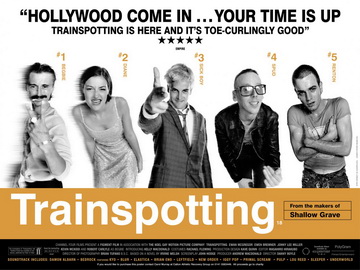
"Choose Life. Choose a job. Choose a career. Choose a family. Choose a fucking big television, choose washing machines, cars, compact disc players and electrical tin openers. Choose good health, low cholesterol and dental insurance. Choose fixed interest mortgage repayments. Choose a starter home. Choose your friends. Choose leisurewear and matching luggage. Choose a three-piece suite on hire purchase in a range of fucking fabrics. Choose DIY and wondering who the fuck you are on Sunday morning. Choose sitting on that couch watching mind-numbing, spirit-crushing game shows, stuffing fucking junk food into your mouth. Choose rotting away at the end of it all, pissing your last in a miserable home, nothing more than an embarrassment to the selfish, fucked up brats you spawned to replace yourselves. Choose your future. Choose life . . . But why would I want to do a thing like that? I chose not to choose life. I chose somethin' else. And the reasons? There are no reasons. Who needs reasons when you've got heroin?" [Watch video]